Find the perfect screen size for your backyard movie night. Calculate based on viewing distance, group size, and choose between inflatable and frame screen options.
Quick answer
For a backyard with viewers 15 to 25 feet from the screen, a 120 to 150 inch screen suits groups of 10 to 20 people, and 150 to 200 inches suits 30 or more. The practical minimum outdoors is 100 inches, and viewers should sit 1.5 to 2.5 times the screen width away.
Indoor rooms use tighter viewing-angle standards than a backyard does, so run the same numbers through the general screen size calculator if the projector also serves a room inside the house.
Screen gain is the ratio of light a screen reflects back to viewers compared with a standard white reference surface, which is why outdoor screens are specified at 1.0 to 1.3 gain rather than the grey, low-gain materials used indoors. Size has a placement cost too: a 150 inch screen needs 9.8 to 19.6 feet of throw distance from a standard-throw projector, so plan where the table or tripod goes. Once you have a size, our best outdoor projector screens guide compares tensioned frames, inflatables and motorized patio screens at that diagonal.
Outdoor viewing typically benefits from larger screens than indoor setups. Calculate your ideal size based on viewing distance and group size.
Ideal Screen Size: 150 inches
For groups of 10-20 people at up to 20 feet
A 150" diagonal screen measures approximately 131" wide x 74" tall (10.9' x 6.1').
Based on your usage frequency and storage space, an inflatable screen offers the best balance of convenience and value.
For a 150" outdoor screen, you'll need minimum 4,000 lumens for nighttime viewing.
For a typical backyard with viewers sitting 15-25 feet away, a 120-150 inch screen works well for groups of 10-20 people. For larger gatherings (30+ people) or viewing distances over 30 feet, consider 150-200 inch screens. A good rule of thumb: screen width should be about 1/3 to 1/2 of your viewing distance for comfortable watching.
Inflatable screens are better for occasional use - they set up in 5-10 minutes, store compactly, and are more affordable. Frame screens provide better image quality (no ripples or movement), are more stable in light wind, and are ideal for permanent or frequent outdoor setups. Choose inflatable for portability, frame for quality.
For comfortable outdoor viewing, sit at a distance of 1.5 to 2.5 times the screen width. For a 120-inch (105-inch wide) screen, ideal viewing is 13-22 feet away. Outdoor viewing typically allows closer seating than indoor since there are no room constraints and viewers often spread out on blankets.
For neighborhood gatherings of 30-50+ people, use a 150-200 inch screen. A 180-inch screen is visible from 40+ feet away, accommodating large groups spread across a typical backyard. Pair with a 4000+ lumen projector to ensure everyone can see clearly, even those in the back rows.
Yes, wind is the biggest enemy of outdoor screens. Inflatable screens should not be used in winds over 10-15 mph - they can deflate, blow over, or suffer torn seams. Frame screens are more wind-resistant but should still be taken down in strong winds (20+ mph). Always stake or weight your screen securely and monitor weather conditions.
16:9 is the best aspect ratio for outdoor movie screens as it matches most streaming content, Blu-rays, and TV shows. While some films are shot in wider formats (2.35:1), 16:9 offers the best versatility. You'll see letterboxing on wider films, but this is preferable to the pillarboxing you'd get with a wider screen showing 16:9 content.
Setup takes 5-15 minutes: 1) Lay out the deflated screen on level ground, 2) Connect the inflation fan and plug in, 3) Wait 2-5 minutes for full inflation, 4) Secure with ground stakes and guy wires, 5) Attach tethers to prevent movement. Keep the fan running during use to maintain inflation. Position away from sprinklers and wind sources.
The minimum practical size for outdoor movies is 100 inches diagonal, suitable for small groups of 4-8 people sitting 10-15 feet away. Anything smaller looks underwhelming outdoors where you lack the intimacy of an indoor room. For most backyard setups, 120-150 inches provides a better cinematic feel.
Allow 2-3 feet behind the screen for the frame/inflation equipment, 3+ feet on each side for stability and speaker placement, and clear space in front based on your viewing distance calculations. For inflatable screens, ensure the fan has clearance and won't be blocked. Total footprint for a 150-inch screen is typically 15x5 feet including frame.
Outdoor screens should be matte white with 1.0-1.3 gain to maximize brightness. Avoid grey or ALR screens outdoors as they reduce overall brightness. Look for screens with mildew-resistant and water-resistant coatings. PVC or vinyl materials handle outdoor conditions better than fabric. UV resistance helps prevent yellowing over time.
Hand-picked screens for backyard movie nights. Affiliate links - we may earn a commission.

14-foot inflatable screen with blower included, front or rear projection. Inflates in a couple of minutes, good for occasional backyard movie nights.
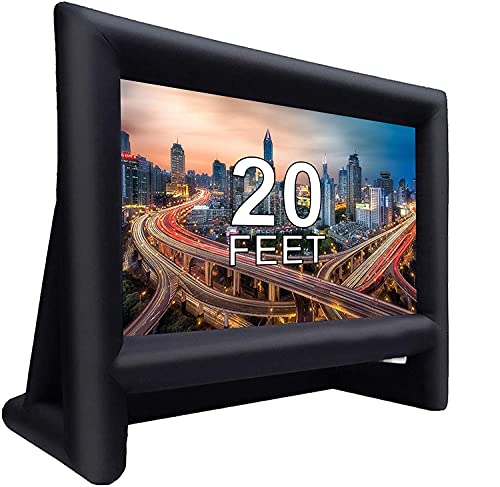
20-foot inflatable for large gatherings. 250 W blower and storage bag included, front or rear projection.

144" diagonal compact inflatable ideal for smaller backyards. Quick inflate/deflate, stores in included bag.

120" portable frame screen with carrying bag. Tensioned surface for flat, ripple-free image. Stakes included.

120" screen on a tool-free snap-together stand, with a black backing layer to cut light bleed from behind. A low-cost step up from an inflatable.
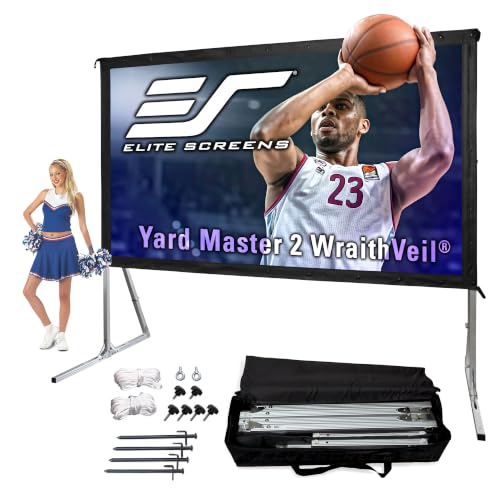
Large 150" freestanding frame screen for serious backyard theaters. WraithVeil Dual material works for front or rear projection with a 150-degree viewing angle.

120" wall-mounted fixed frame with 1.0 gain light grey material. It has no legs, so it suits a covered patio or screened porch wall rather than open weather.
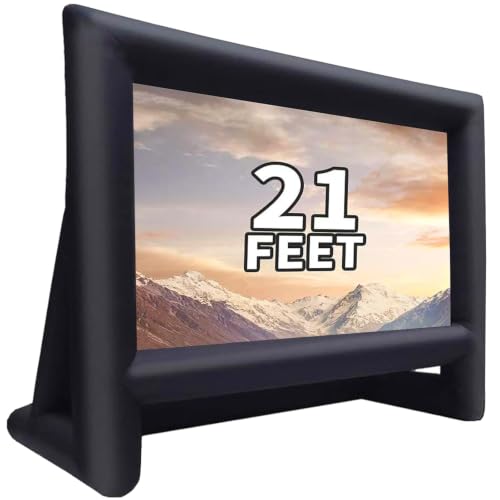
21-foot inflatable with a 13 x 7.4 foot double-sided projection surface. Sized for block parties and bigger crowds.

145" freestanding frame screen with adjustable height. CineWhite UHD-B 1.3 gain material with a black backing for a brighter image outdoors.