Why the center channel matters more than any other speaker
In a 5.1 or 7.1 system the center channel is where nearly all spoken dialogue is mixed. Film and TV mixers pan voices to the center so that they stay anchored to the screen no matter where you sit. If the center is weak, muddy or mismatched with the left and right speakers, you end up turning the volume up for dialogue and down for explosions, which is the most common complaint in home theaters that otherwise sound fine.
That is why a good center is usually worth a larger share of your speaker budget than people expect. The usual advice from speaker makers is to keep the center in the same product family as the front left and right speakers, so that the tweeter and midrange voicing match as a voice moves across the screen. This guide follows that rule: where a brand sells a matching tower or bookshelf pair, we say so, and you can build the whole front stage from one family.
How we chose these six
We built this list from manufacturer specifications and the product details Amazon publishes for each model, not from a lab. Each speaker is a dedicated, passive center channel that is in stock on Amazon as of this update, and each is available in a price tier that suits a different room. We favored designs that have a dedicated tweeter plus two or more woofers, because a center that uses two woofers flanking the tweeter keeps the sound consistent when you sit off axis.
Center Channel Speaker Reviews

Polk Audio Signature Elite ES35
Best OverallThe Polk Signature Elite ES35 is a slim center channel built around a 1-inch Terylene tweeter and a pair of woofers, with Polk's Power Port technology to add bass impact from a shallow cabinet. Polk lists it as compatible with both 4-ohm and 8-ohm receivers, which makes it easy to pair with most AV receivers.
The reason it takes the top spot is the shape. A slim cabinet can sit on a console under a wall-mounted TV or mount directly below it without blocking the TV's infrared sensor, which is exactly where many centers end up. If your TV is on a stand with a shelf below it, the ES35 gives you a larger step up in dialogue clarity than the soundbar it replaces, and it pairs naturally with the Signature Elite tower and bookshelf speakers when you are ready to complete the front stage.
- 1" Terylene tweeter
- Dual woofers, slim cabinet
- Power Port bass
- 4 and 8 ohm compatible
Pros: Slim profile suits wall-mounted TVs, strong dialogue focus, matches Signature Elite speakers.
Cons: Needs a separate AV receiver and a stand or wall bracket; slim designs trade some bass for height.

KEF Q6 Meta Center
Best PremiumThe KEF Q6 Meta is a three-way center channel that uses KEF's twelfth-generation Uni-Q driver, which places the tweeter at the acoustic center of the midrange cone so that high and mid frequencies come from a single point. KEF's listing also describes its Metamaterial Absorption Technology, which absorbs sound radiating from behind the tweeter to reduce distortion, and two 165 mm hybrid aluminum bass drivers.
In practice that means voices keep their tone when you sit well off to the side, which is the weak point of many centers. It is a large, heavy speaker and needs a deep shelf or a proper stand, so it fits best in a dedicated room with a matching KEF Q-series front pair. If you are building a system you intend to keep for years, this is the center that the rest of the speakers should be matched to. See our comparison of the KEF Q1 Meta against two rivals if you are choosing the bookshelf pair that goes with it.
- Three-way design
- 12th-gen Uni-Q driver
- Two 165 mm bass drivers
- Metamaterial Absorption Technology
Pros: Very natural voices across the seating area, premium build, works as a left, center or right speaker.
Cons: Large cabinet needs a deep shelf; the premium tier makes sense only with good front speakers.

SVS Prime Center
Best Upper Mid-RangeThe SVS Prime Center pairs a 1-inch aluminum dome tweeter with a light, rigid cone material and a three-way crossover that SVS calls SoundMatch. The goal, in SVS's own description, is clear, anchored dialogue that holds together at high output.
It is the center we would choose for a larger living room or a dedicated space where you listen at reference levels, because it is built to keep dialogue intelligible when the soundtrack gets loud. It matches the SVS Prime tower and bookshelf speakers. The cabinet is wide, so measure your shelf before you order.
- 1" aluminum dome tweeter
- Three-way crossover
- Matches SVS Prime family
- Ported cabinet
Pros: Holds clarity at high volume, sizable soundstage for large rooms, part of a well-regarded matching family.
Cons: Wide cabinet, and the price rises quickly once you add matching fronts.

Sony SS-CS8M2
Best Sony-MatchedThe Sony SS-CS8M2 is a two-way, three-driver center channel from the second-generation Sony CS series. It uses two 3.94-inch woofers on either side of a high-precision tweeter, in a bass reflex enclosure that Sony says is designed to keep low frequencies free of distortion.
This is the one to buy if your front speakers are Sony CS models, such as the SS-CS5M2 bookshelf or SS-CS3M2 floorstanding speakers, because the voicing is matched across the line. The smaller woofers make it a good fit for moderate rooms, and the cabinet is lighter than the premium options here. In a very large room we would step up to the SVS or KEF.
- 2-way, 3 drivers
- Two 3.94" woofers
- Bass reflex enclosure
- Sony CS series match
Pros: Matches the Sony CS line, compact enough for most shelves, easy to place.
Cons: Small woofers limit output in large rooms; less useful if your fronts are another brand.
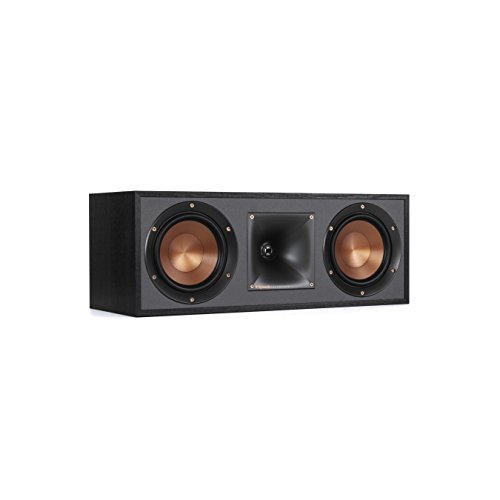
Klipsch R-52C
Best ValueThe Klipsch R-52C uses dual 5.25-inch spun-copper woofers and a 1-inch aluminum tweeter mated to a 90x90 square Tractrix horn. Klipsch lists a sensitivity of 95 dB at 2.83 V per meter and 400 watts of power handling, with a frequency response of 89 Hz to 21 kHz plus or minus 3 dB.
That sensitivity number is the story: it means the R-52C gets loud without demanding much from your receiver, so it is a smart match for an entry-level AV receiver. The horn gives dialogue a forward, punchy character that some listeners love and others find bright, so it is best with a Klipsch Reference front pair and in a room with some soft furnishings. If you want a gentler tone, look at the Polk or Sony options above.
- Dual 5.25" copper woofers
- 1" aluminum tweeter, 90x90 horn
- 95 dB sensitivity
- 89 Hz to 21 kHz
Pros: High sensitivity, strong value, dynamic dialogue, matches the Klipsch Reference family.
Cons: The horn can sound bright in hard-surfaced rooms; not a slim design.
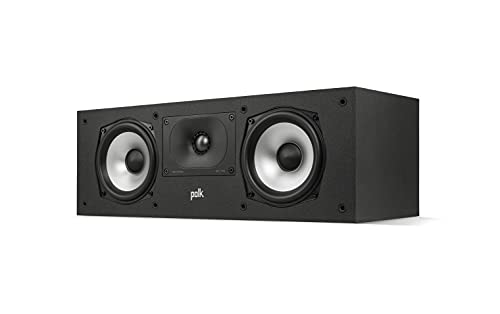
Polk Audio Monitor XT30
Best BudgetThe Polk Monitor XT30 is a compact center built around a 1-inch tweeter and two 5.25-inch woofers. Polk lists the speaker as compatible with Dolby Atmos and DTS:X sources and with both 4-ohm and 8-ohm receivers, and it is part of a timbre-matched Monitor XT family that includes bookshelf and tower speakers.
It is the starter pick: small enough for an AV console or a bookshelf, and the cheapest way to get a true dedicated center instead of relying on a soundbar or your TV speakers. In a small room or an apartment it is more than enough; in a larger space you will notice that it lacks the output of the Klipsch and SVS options.
- 1" tweeter
- Two 5.25" woofers
- Atmos and DTS:X compatible
- 4 and 8 ohm compatible
Pros: Lowest entry cost, compact, matches Monitor XT bookshelf and tower speakers.
Cons: Modest output in large rooms and a smaller soundstage than the premium picks.
How to size a center channel to your front speakers
The classic rule is that the center should be the same family as the left and right speakers and, where possible, should have the same or similar driver complement. A center with a smaller tweeter or a different voicing than the fronts creates an audible change in tone as an actor walks across the screen. If you cannot match the family exactly, match the tweeter type: dome to dome, or horn to horn, and avoid mixing the two.
The second rule is height. A center on a shelf under the TV should sit as close to the bottom of the screen as possible and be tilted toward the listeners' ears when it can. If it is more than a few inches below ear height at the main seat, angle it up with a small wedge or choose a model with a tilt-friendly foot. The surround sound speaker placement guide walks through the angles for the rest of the layout.
Slim, standard or large: which shape to buy
Slim centers, like the Polk ES35, are designed for rooms where the TV is wall mounted and there is no deep shelf. Standard centers, like the Klipsch R-52C and Polk XT30, fit most AV consoles and offer a good balance of size and output. Large three-way centers, like the KEF Q6 Meta and SVS Prime, fit best in a dedicated room where the equipment rack or a stand can take their depth. Measure width, height and depth, and include the room for the speaker terminals at the back.
Matching the center to your AV receiver
Most of the centers here are rated for 4 or 8 ohm and are easy loads for modern receivers, but power matters. A high-sensitivity speaker like the Klipsch will play loud on an entry-level receiver. A lower-sensitivity speaker needs a more powerful receiver to reach the same level. Our best home theater receivers guide lists receivers by channel count and power, and the best AV receivers under $1,000 page narrows that list to the models most buyers actually choose.
Dialogue settings that help any center
Before you spend more, run your receiver's room correction and confirm that the center level is set so that voices are clear. If dialogue is still hard to follow, raise the center trim by one or two decibels or turn on your receiver's dialogue enhancement setting. Also check that your TV or source is sending a surround soundtrack and not a stereo downmix. For Atmos systems, see our Dolby Atmos settings guide.